Brew methods
From espresso to syphon — how the coffee is extracted.
Brew methods
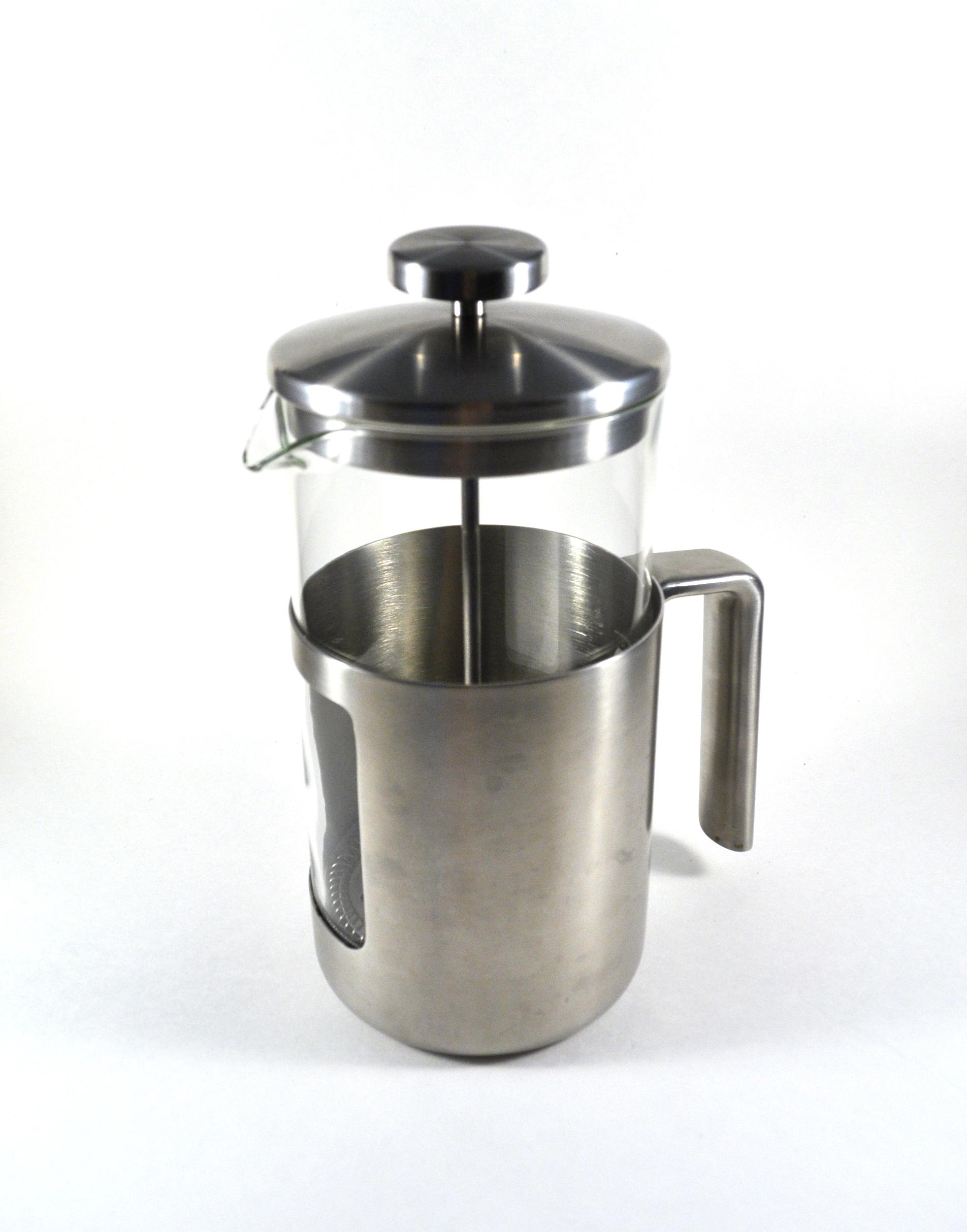
Begin with how the water meets the grounds. In immersion, coffee steeps in water, as in a French press. In a pour-over, water flows through a bed of grounds and a filter. Source: Hario French press Source: SCA pour-over guide
Immersion
The grounds steep in water.
Pour-over
Water flows through the grounds and filter.

Espresso uses pressure to move water through finely ground coffee. AeroPress combines immersion with pressure and filtration, so a device need not fit only one family. Source: SCA espresso Source: AeroPress via SCA
Equipment
V60, Kalita Wave and Chemex name particular brewers. Nitro describes nitrogen-infused coffee served as a drink, not the way water first extracts the grounds. Source: Hario V60 Source: Kalita Wave Source: Chemex Source: Starbucks Nitro
The filter can change what reaches the cup: the AeroPress metal filter allows oils through, while its paper filters retain them. Source: AeroPress filters
Building a recipe
Try this starting recipe for a two-cup paper pour-over: 22 g of medium-fine coffee, 400 g of water at 93.5°C, and a brewing target of 2½–3 minutes. That dose is about one gram of coffee for every 18 grams of water. Source: SCA pour-over guide
Rinse the paper filter, discard the rinse water and add the grounds. Start with 50 g of water, wait 30 seconds, then slowly pour the remaining water to reach 400 g. Source: SCA pour-over guide
Water
Water composition matters as well as temperature: its alkalinity can change perceived acidity, while the coffee-to-water ratio also affects the result. Source: SCA water and acidity
Use the recipe as a starting comparison, not a promise for every brewer. Record dose, water, grind, temperature and time; change one at a time and taste the result. Continue to Tasting for words to describe it.
Find a brew in the catalogue
Explore the brewing and serving labels recorded on café profiles. The map's brew filters are: Hand brew, Batch brew, Espresso.
- Method families
- Espresso · Batch brew · Filter · Pour-over · Hand brew · Cold brew
- Named brewers
- V60 · Kalita · Chemex · Origami · Aeropress · French press · Syphon
- Serving styles
- Nitro